Ontario’s Million-Player Market Rewrites Casino Competition Rules
The Numbers That Shook the Industry
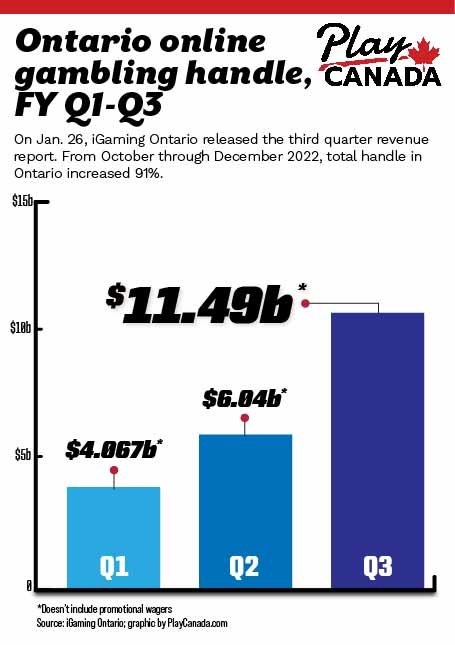
When Ontario launched its regulated online gambling market in April 2022, industry analysts predicted modest growth. They were spectacularly wrong. By late 2026, the province boasts over 1.2 million active gambling accounts—a figure that has fundamentally altered how casinos compete not just in Canada, but globally. This isn’t just about market size; it’s about the emergence of a new competitive paradigm that’s forcing operators worldwide to rethink their table games strategies.
The sheer velocity of Ontario’s growth caught even seasoned operators off guard. “We anticipated maybe 600,000 accounts by year three,” admits Sarah Chen, Senior Gaming Analyst at Deloitte Canada. “Instead, we hit that milestone in eight months. The implications for table games competition have been profound—operators are now designing live dealer experiences specifically for this hyper-engaged demographic.”
What makes Ontario’s numbers particularly striking is the engagement depth. Unlike many jurisdictions where casual players dominate, Ontario shows 67% of active accounts engaging with live dealer table games monthly—nearly double the global average of 34%. This has created a feeding frenzy among operators scrambling to capture and retain these high-value players.
The Live Dealer Arms Race Intensifies
Ontario’s million-plus player base has triggered what industry insiders call the “live dealer arms race.” Operators are investing unprecedented sums in studio technology, dealer training, and game variety. Evolution Gaming, the sector’s dominant force, reported a 340% increase in Ontario-specific studio capacity between 2022 and 2026. But it’s not just about quantity—it’s about sophistication.
The competition has pushed operators to offer increasingly specialized table games experiences. Where once a basic blackjack table sufficed, platforms like National Casino now feature multiple blackjack variants with Ontario-specific betting limits, Canadian dealer accents, and even regional cultural touches during holiday periods. This localization trend, born from Ontario’s competitive pressure, is now spreading globally.
The numbers tell the story: Ontario operators now offer an average of 47 live dealer table variants, compared to the global average of 23. Roulette alone has spawned 12 different versions across major platforms, from Lightning Roulette to immersive VR experiences that didn’t exist three years ago. This variety isn’t just marketing fluff—retention data shows players who engage with three or more table variants stay active 85% longer than single-game players.
Betting Limits Revolution Spreads Beyond Borders
Perhaps nowhere is Ontario’s influence more visible than in betting limits. The province’s diverse player base—from casual $5 bettors to high-rollers wagering $50,000 per hand—has forced operators to completely reimagine their table structures. Traditional fixed-limit tables are giving way to dynamic systems that adjust based on real-time demand and player preferences.
“Ontario taught us that one-size-fits-all doesn’t work anymore,” explains Marcus Rodriguez, Head of Table Games at a major European operator who requested anonymity. “We’ve now implemented Ontario-style flexible limits across our entire network. A roulette table might start at $1 minimum during off-peak hours, then automatically adjust to $25 minimum when high-value players join. It’s algorithmic game management.”
The ripple effects extend far beyond Canada. European operators report implementing “Ontario protocols”—dynamic betting ranges, multi-language dealer options, and real-time game switching—across their international platforms. What started as competitive necessity in one province has become global best practice. The data supports this shift: operators using flexible limit systems report 28% higher player lifetime value compared to fixed-limit competitors.
Technology Innovation Driven by Scale
Ontario’s massive player base has become a testing ground for cutting-edge table games technology. With over 1.2 million active accounts generating billions of data points monthly, operators can test and refine innovations at unprecedented scale. The results are reshaping how table games operate worldwide.
Artificial intelligence now powers dealer scheduling, predicting peak demand with 94% accuracy and ensuring optimal staffing levels. Machine learning algorithms analyze player betting patterns to suggest personalized game recommendations—a blackjack player might receive targeted promotions for baccarat variants they’re statistically likely to enjoy. These AI-driven insights, refined through Ontario’s massive dataset, are now standard across major international platforms.
The technology arms race has also accelerated mobile optimization. Ontario players conduct 73% of their table games sessions on mobile devices, forcing operators to redesign interfaces from scratch. The resulting mobile-first designs—featuring one-handed betting controls, portrait-mode optimization, and gesture-based interactions—are now industry standard globally. What began as Ontario adaptation has become universal expectation.
The Loyalty Program Evolution
Traditional casino loyalty programs, built around slot machine play and comp points, proved woefully inadequate for Ontario’s sophisticated table games players. The province’s competitive landscape has spawned entirely new approaches to player retention that are revolutionizing loyalty programs worldwide.
Modern Ontario operators now offer table-specific rewards: exclusive dealer access, personalized betting limits, and even custom game variants for VIP players. One major operator reports that their “Table Masters” program—offering dedicated dealers for high-value roulette players—has been so successful in Ontario that they’re rolling it out to 15 international markets in 2026.
The sophistication extends to micro-rewards and behavioral incentives. Players might earn bonuses for trying new table variants, maintaining consistent session lengths, or demonstrating improved strategy in blackjack. These granular reward systems, impossible to implement effectively before Ontario’s data-rich environment, now drive player engagement across global markets. Early adopters report 45% higher player retention compared to traditional comp-based programs.
Regulatory Ripple Effects Reshape Global Standards
Ontario’s regulatory framework—emphasizing player protection, responsible gambling, and transparency—has become the gold standard that other jurisdictions aspire to match. The province’s million-plus player base provides unprecedented data on how these regulations perform at scale, influencing policy decisions worldwide.
The province’s mandatory reality checks, session limits, and spending controls initially worried operators about potential revenue impact. Instead, data from 2026 shows these measures actually increased long-term player value by reducing churn and problem gambling incidents. “Ontario proved that player protection and profitability aren’t mutually exclusive,” notes Dr. Jennifer Walsh, Director of Gambling Policy at the University of Toronto. “Jurisdictions from Malta to New Jersey are now implementing Ontario-style protections.”
The transparency requirements have also driven innovation. Real-time RTP displays, detailed game statistics, and mandatory cooling-off periods—once seen as competitive disadvantages—are now viewed as trust-building features that sophisticated players expect. Operators report that markets with Ontario-style transparency requirements actually show higher player confidence and longer session durations.
The Future Competitive Landscape
Ontario’s influence on global casino competition shows no signs of waning. The province’s player base continues growing at 15% annually, while engagement deepens across all table games categories. This sustained growth is forcing operators to think beyond traditional competitive metrics toward ecosystem-based strategies.
Emerging trends include cross-platform integration, where table games performance influences sports betting odds and poker tournament invitations. Social features—allowing players to share big wins or compete in leaderboards—are transforming solitary table games into community experiences. These innovations, tested and refined in Ontario’s competitive crucible, are rapidly spreading to international markets.
The most significant shift may be philosophical. Ontario has demonstrated that sustainable casino competition isn’t about extracting maximum short-term value from players, but about creating engaging, fair, and transparent experiences that build long-term relationships. This player-centric approach, validated by Ontario’s remarkable growth and retention metrics, is becoming the new competitive imperative worldwide.
As we look toward 2027 and beyond, one thing is clear: Ontario’s million-plus active accounts have permanently altered the casino landscape. What started as a provincial market experiment has become a global template for how modern casino competition should operate. The question isn’t whether other markets will follow Ontario’s lead—it’s how quickly they can adapt to survive in this new competitive reality.